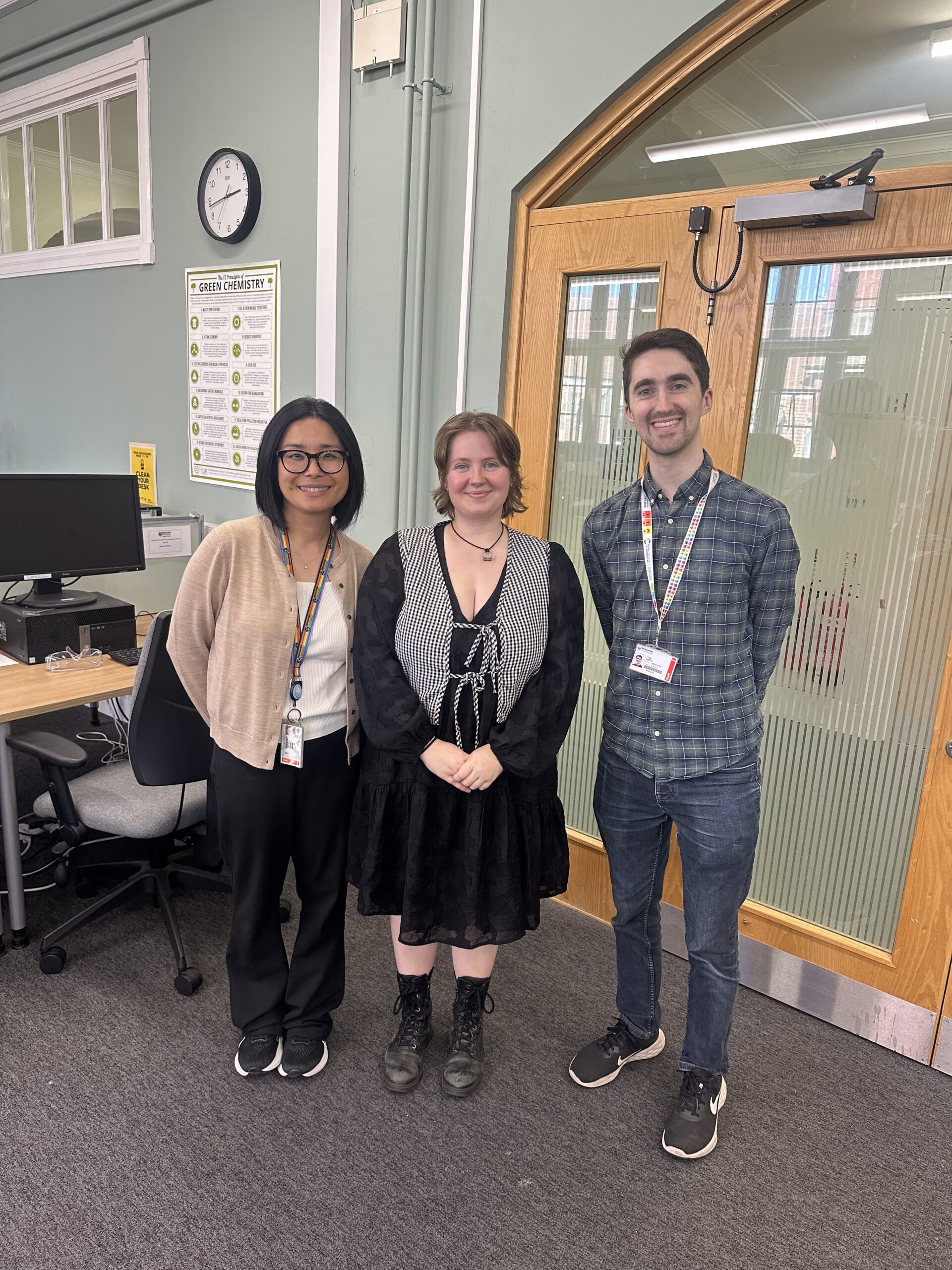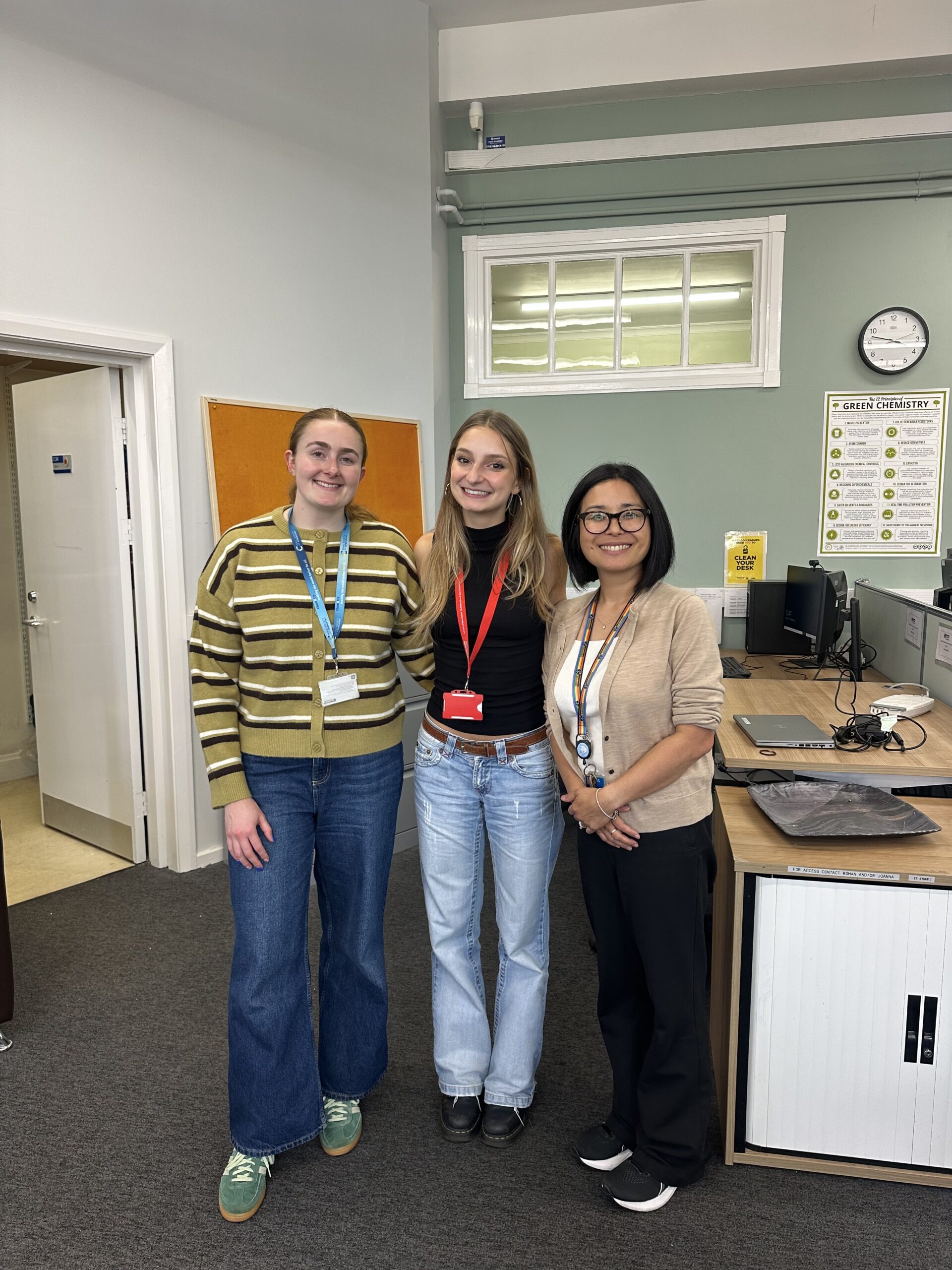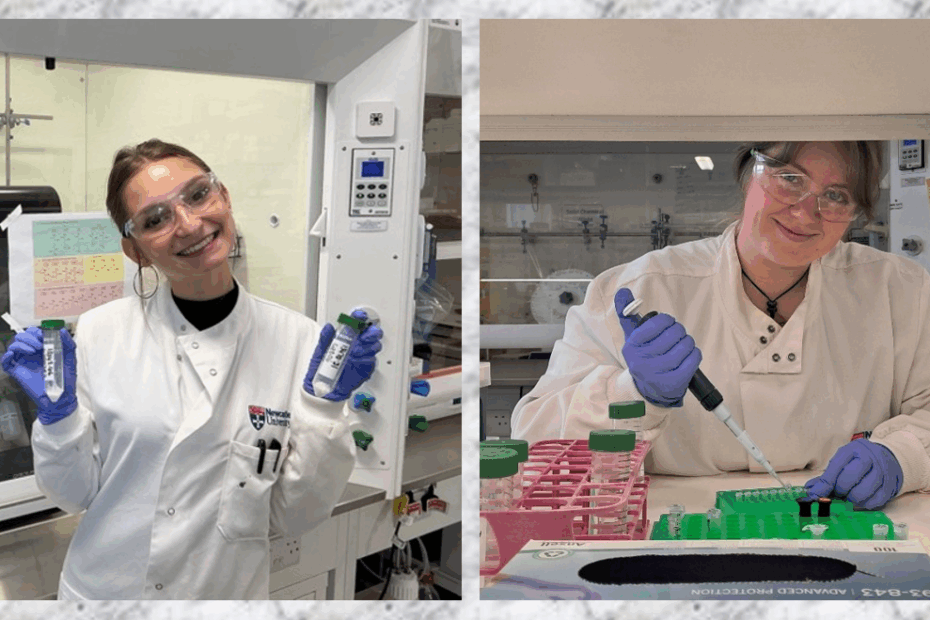
This summer, two Newcastle University students joined the Kawamura Research Group through summer studentships, gaining valuable hands-on experience in chemical biology research. Working alongside researchers in the laboratory, they developed practical skills, contributed to active research projects, and gained insight into the day-to-day realities of academic research. Below, Karin Ware and Gabriela Giordano Zanini share their reflections on their experiences and the impact the placements have had on their future aspirations.
Karin Ware, Stage 3 MChem student (Newcastle University)
“Over the summer, I have had the wonderful opportunity to work in the Chemical Biology group at Newcastle University on a project funded by the Royal Society of Chemistry Undergraduate Research Bursary. I worked on chemical modification of peptides in mRNA-display, and the extent to which the RNA remains intact. We utilised a range of techniques from RNA acrylamide gels to click chemistry to amino acid and peptide synthesis in order to achieve this. Both the lab skills and problem-solving skills I have learnt will stand me in good stead for my MChem next year, and I am confident that I am now in a much better position to achieve my goals in research.
It has been an honour to work among some of the kindest and most hard-working people, and I have been inspired by them all. Thank you to everyone in the Kawamura Group, especially Prof. Kawamura and Dr Smith for their supervision!”
Gabriela Giordano Zanini, MSci Biochemistry, Newcastle University
“My summer placement in the Kawamura Group was an exciting and rewarding learning experience. I undertook an EPSRC-DLA research project supervised by Dr Tom Smith involving synthesising, modifying, and testing peptides. I also worked with Dr Eleanor Taylor-Newman in applications of these peptides for the targeting of an Epstein-Barr virus antigen. I enjoyed learning techniques beyond the scope of my degree, including peptide synthesis and purification, and a variety of binding assays (such as Fluorescence polarisation and Bio-Layer interferometry). The group was extremely welcoming, and I was pleasantly surprised by how collaborative the project was, especially when it came to tackling difficulties brought about by our experiments. Overall, this opportunity has further encouraged me to pursue an academic career and postgraduate studies.”